Unnatural Apex
I. The Obscene Beauty of Power

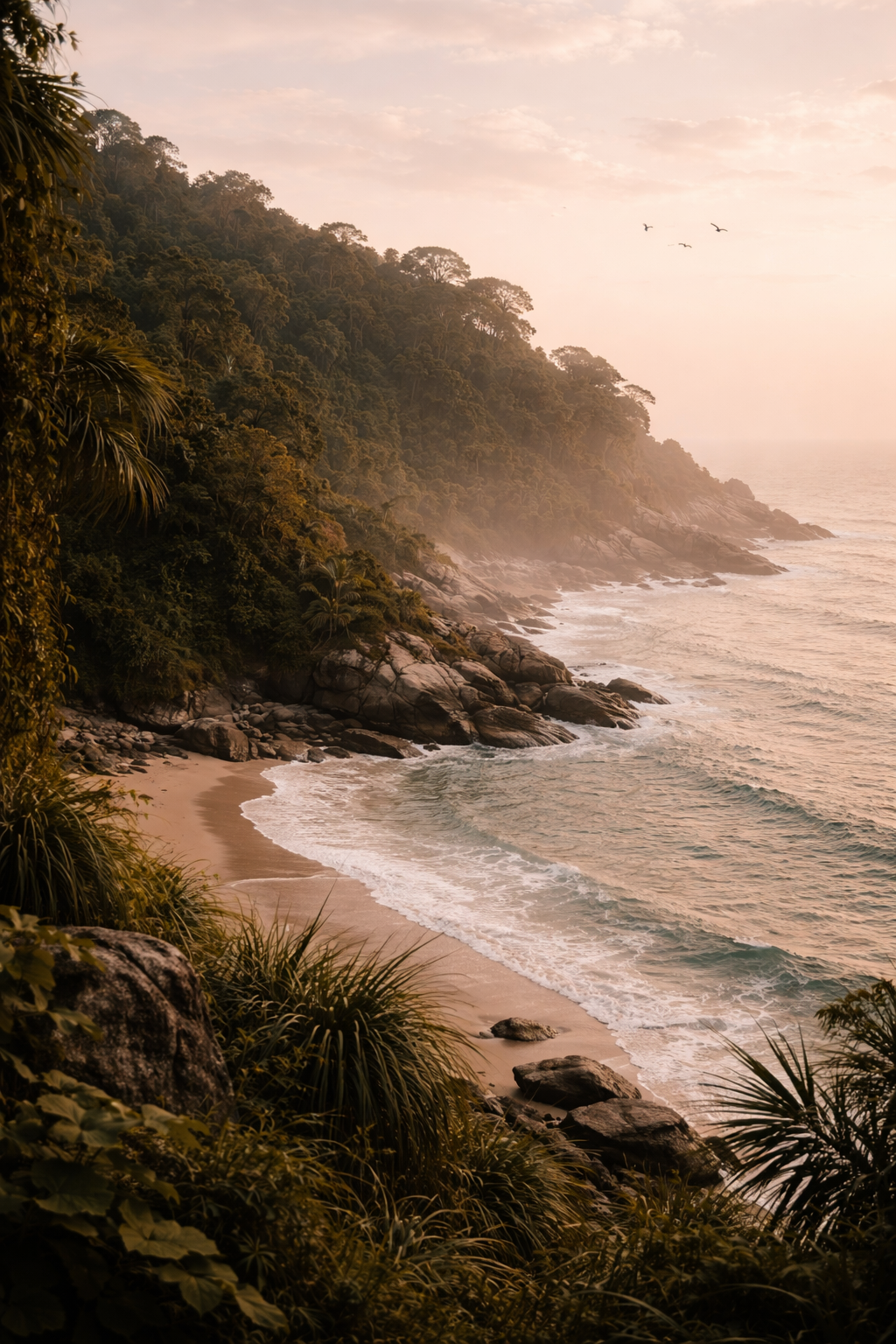
There are places so beautiful they ask for silence.
Landscapes that soften the body the moment you arrive. The sky settles into stillness. The breeze moves with the rhythm of breath. Something within you loosens, as though tension has been held for longer than memory can trace.
You stand there and feel yourself return.
Then your gaze shifts.
He appears.
A figure resting against a palm as though it carries an obligation. Draped in the language of wealth, yet detached from awareness. His voice rises above the terrain. His laughter carries weight. His presence presses against the atmosphere.
Everything around him already holds magnitude, though expressed with grace.
A question emerges.
Why do fragile and sacred landscapes attract this kind of presence? Why does paradise become a stage for performance? Why does beauty draw those who seek to occupy it?
The feeling settles somewhere deep.
A quiet disturbance.
A realization begins to form.
Perhaps this is an attempt at becoming something primal.
II. The Unnatural Apex
Nature carries its own hierarchy.
Tigers move through forest with purpose. Sharks cut through water with precision. Eagles descend with clarity. Each presence shapes the rhythm of its environment.
Power exists within relationship.
Each movement holds consequence. Each instinct forms part of a larger system. Each life participates in a cycle that sustains the whole.
This is power as integration.
Now consider another presence.
A man arrives at a cliffside. The land remains unfamiliar to him. Champagne travels across continents to meet his hand. Images are captured to construct a narrative of dominance.
The scene holds intention.
A performance of power.
The position of apex becomes a visual language. The body adopts gestures of control. The environment becomes an accessory.
This is where the concept emerges.
The Unnatural Apex.
A masculinity that reaches for dominance through image. A presence that seeks elevation without relationship. A posture of power that remains detached from the systems that sustain it.
Ownership becomes a substitute for belonging.
III. Trophy Landscapes
Collection has always carried symbolic weight.
Animals, artifacts, territories, bodies, objects. Each acquisition becomes a marker of status.
Today, landscapes enter that same vocabulary.
Islands, deserts, forests, coastlines.
Spaces once guided by rhythm now transform into curated environments. Silence becomes a product. Seclusion becomes a feature. Terrain becomes experience.
These places begin to operate as stages.
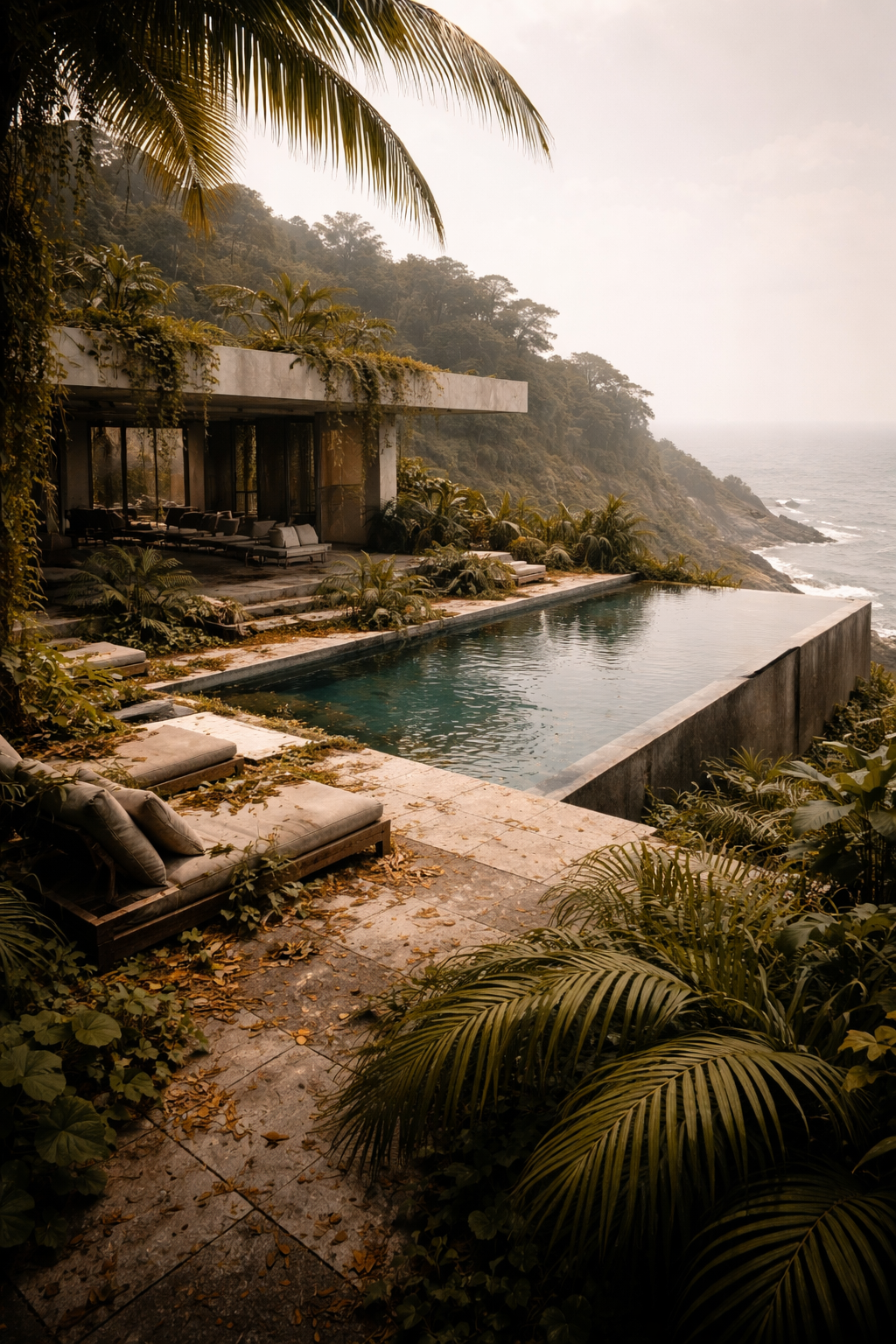
Architecture settles into ecosystems. Surfaces shift to accommodate comfort. The language of luxury overlays the memory of the land.
The transformation continues quietly.
The narrative changes.
Places described as untouched now carry layers of intervention. The story becomes one of access, ownership, and experience.
A new form of occupation takes shape.
It arrives with elegance.
IV. Presence and Power
Belonging expresses itself through attunement.
A predator senses the terrain. Movement follows the logic of the environment. Survival depends on understanding. Power exists through alignment.
A shark moves with the current. A lion reads the wind. An eagle understands distance.
Presence becomes knowledge.
The Unnatural Apex enters differently.
Sound precedes arrival. Objects accompany the body. Technology frames the moment. The environment receives instruction.
Value is measured through acquisition.
The land remains unchanged in its own perception.
A deeper tension reveals itself.
Masculinity begins to operate through spectacle. Presence shifts into display. Power becomes something to be seen.
Applause replaces intimacy.
Silence carries another meaning.
V. Curating the Unnatural Apex
The idea expands beyond observation.
It invites construction.
An exhibition emerges from this tension.
A space that asks:
Who occupies beauty?
Who speaks within silence?
What defines belonging?
The curatorial language unfolds through material and gesture.
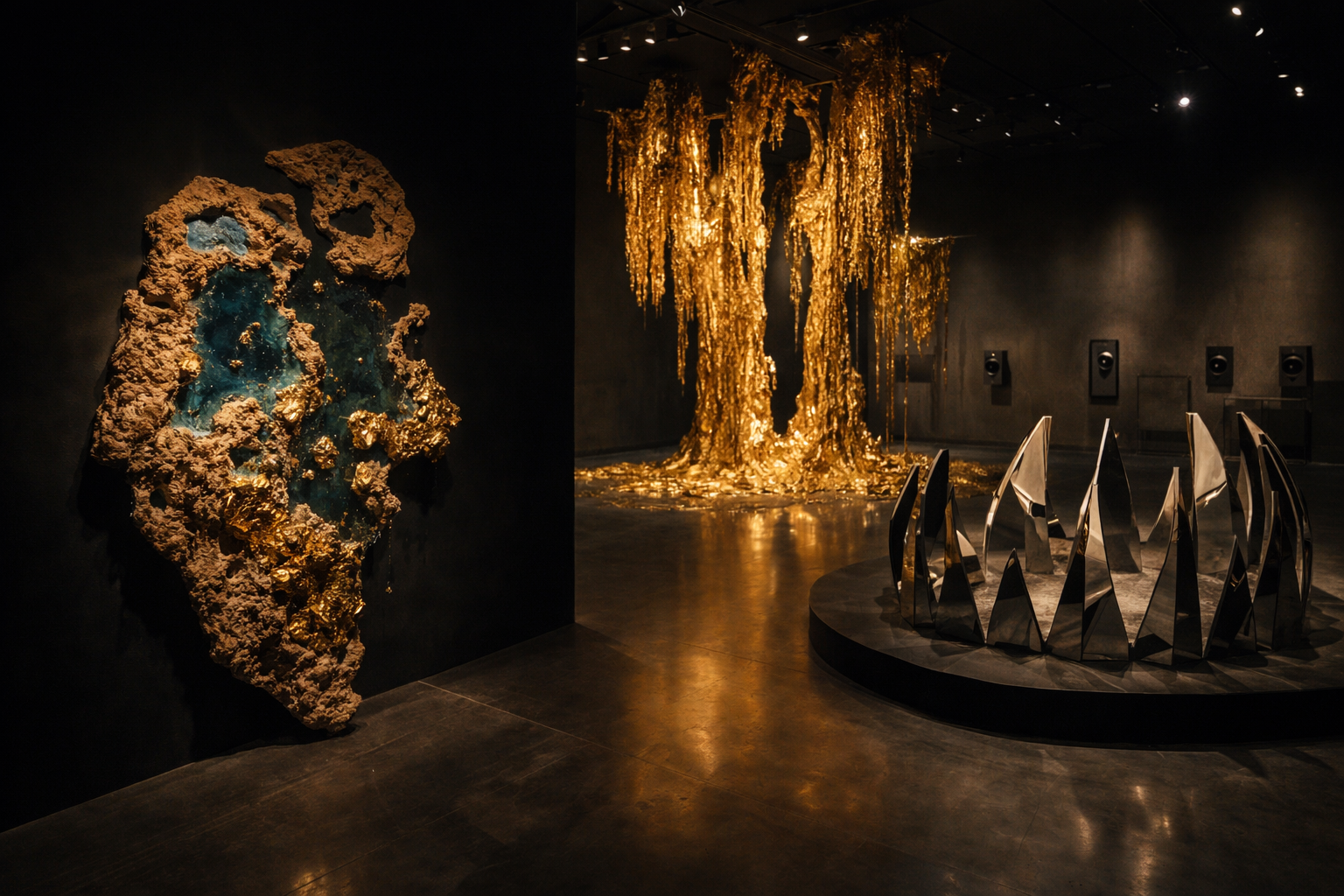
Distorted maps trace the transformation of landscapes into symbols of status. Sculptures carry the residue of excess, appearing as fossils of opulence. Sound travels through the room, blending animal calls with fragments of celebration.
Spaces begin to shift.
Mirrors take the form of teeth.
Forests shimmer in gold, their surfaces slowly dissolving.
Images capture abandoned structures returning to the rhythm of the wild.
The exhibition holds a single question at its core.
How does power move through the world?
VI. The Memory of the Land
Some presences integrate into the story.
Others pass through its surface.
The Unnatural Apex moves with certainty. The reef reflects light onto the hull of a yacht. The mountain holds the structure placed upon it. The silence surrounds the moment.
A belief takes root.
Recognition feels close.
The land continues to hold memory.
Trees carry time within their rings. Sand records movement. Water preserves rhythm. Birds trace patterns across the sky.
Everything remembers.
Time unfolds.
The image fades.
The land continues.